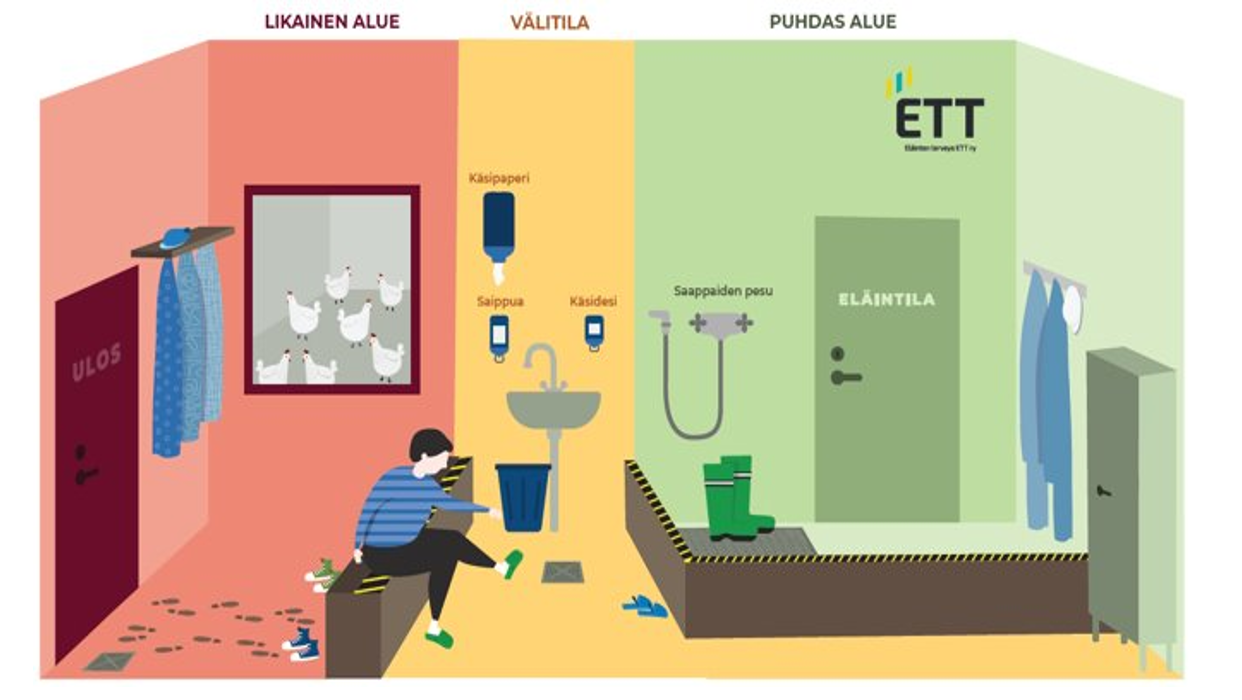
Animal disease control plays an important role in the prevention of animal diseases. This refers to the intermediate space between the outer door and the animal shelter. In this space, shoes and protective clothing are changed so that pathogens from outside are not carried into the animal housing on equipment. On the other hand, the purpose of the disease barrier is also to prevent the spread of disease from one farm to another by visitors.
Research Center WANDER is currently running a project called Improving Animal Disease Risk Management with New Technologies (ERISTEK). The project aims to improve the welfare of farm animals and increase the profitability of livestock farms by applying new technological solutions to combat animal diseases.
There are many factors to consider when designing a disease control space, as explained by expert veterinarian Hertta Pirkkalainen from Eläinten terveys ETT ry (Animal Health ETT) at the ERISTEK project workshop on January 22, 2026. The workshop was organized in collaboration with ETT's Vastuuki project. Veterinary expert Hertta Pirkkalainen spoke about disease control on animal farms and discussed the specific characteristics of disease control for different animal groups in her presentation.
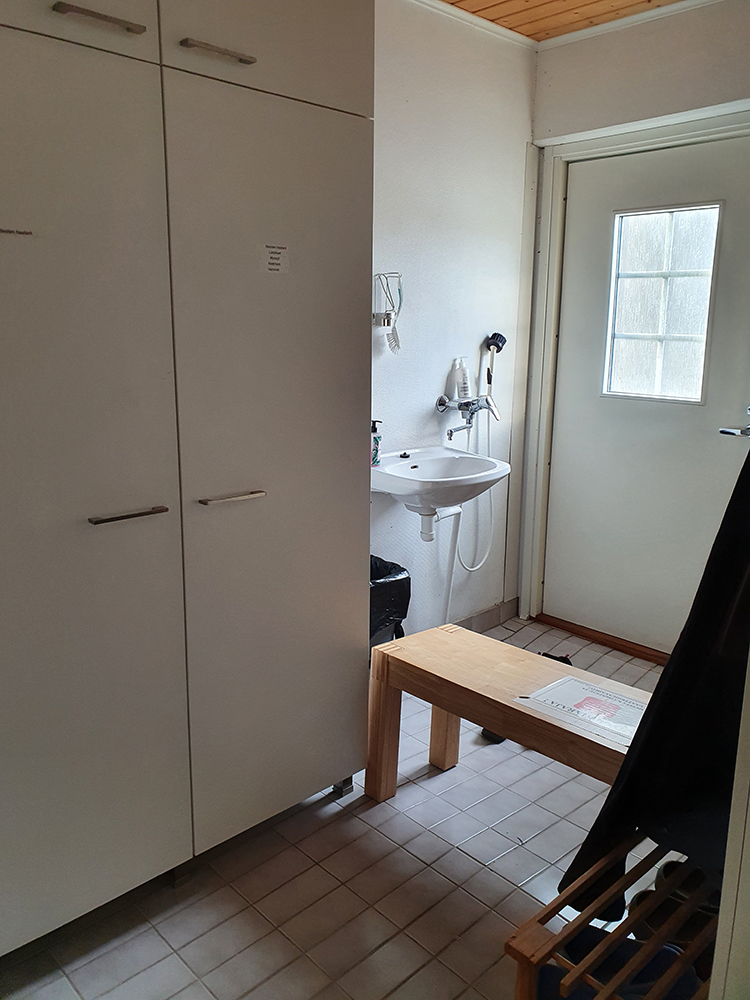
– We need to change our thinking as farm sizes have grown, familiar diseases have spread effectively, and new animal diseases have arrived in Finland, said Pirkkalainen on the importance of disease barriers. The workshop provided concrete examples of different types of disease barriers and the equipment needed for them. In her presentation, Pirkkalainen also discussed special cases, such as hand washing without running water, equipment transported between facilities, and so-called functional, i.e., movable disease barriers. Cleaning practices in isolation rooms emerged as an important issue.
Challenges and solutions in disease control in practice
The presentation sparked a lot of good discussion, and the workshop continued to explore the topic, particularly with regards to the challenges and solutions associated with disease control. The challenges identified included inadequate cleaning of disease control facilities, ventilation problems, and attitude problems in understanding the importance of disease control facilities. Solutions to these challenges included using imagination in the design of disease control facilities, better instructions, improving cleaning practices, and changing attitudes. The workshop also generated good ideas for topics for future workshops. Participants expressed a desire to learn more about disinfectants suitable for disease control facilities, ventilation design, and experiences with the use of UV light.
Based on the experiences and feedback received, the next workshop is being planned for the end of 2026. Stay tuned!
In addition to the Research Center WANDER at Satakunta University of Applied Sciences, the ERISTEK project involves Lilja C Oy, Uudenmaan Pintasuojaus Ky, Säkylän Munakori Oy, Saloniemen tila, and Vetman Oy. The project is funded by the Rural Development Fund/European Innovation Platform (EIP).